
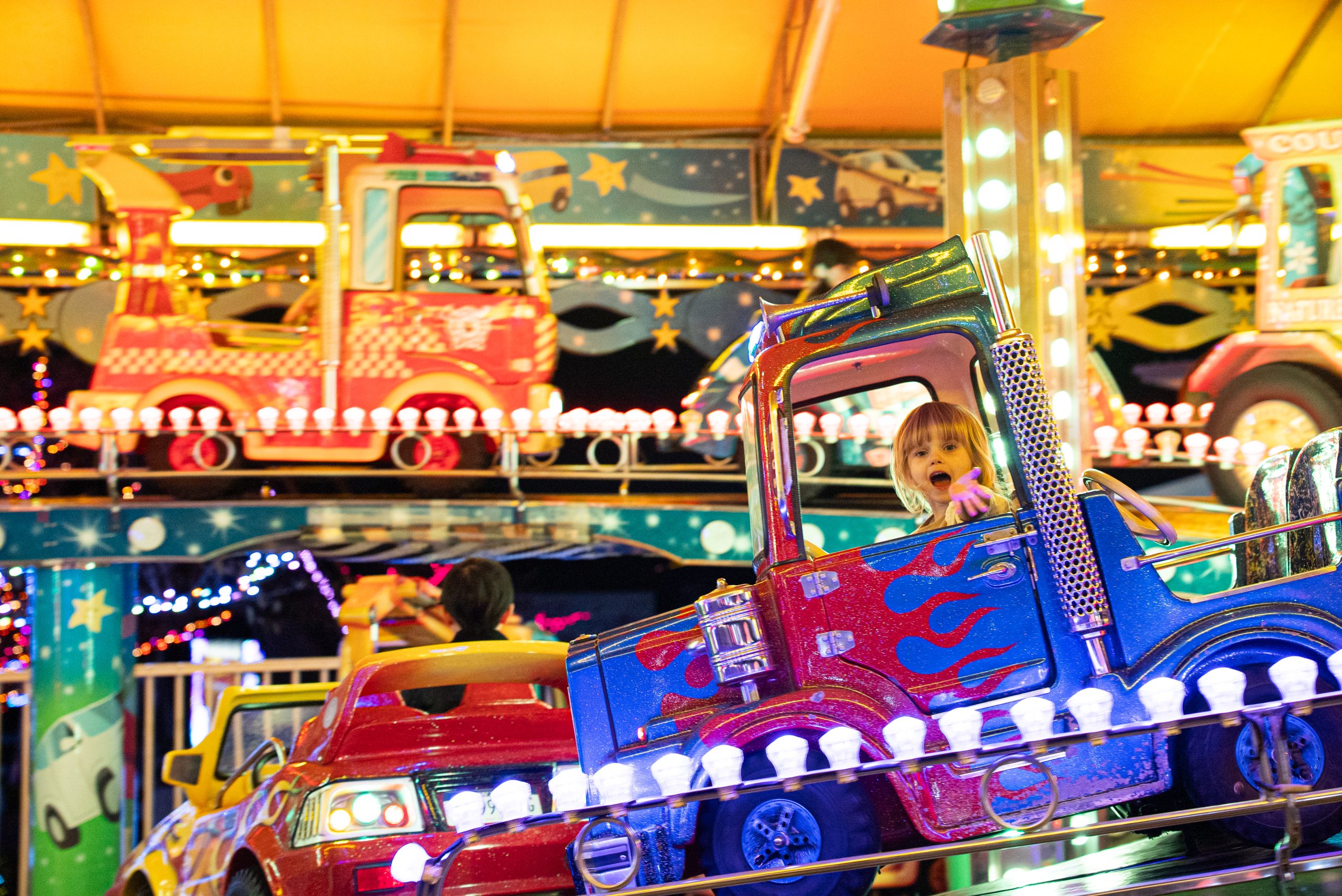
5 Family-Friendly Places to Explore in Minami-Tama, West Tokyo
It’s a rollercoaster of adventure down there.
Tokyo is a wonderland in itself—there’s a bit of everything for everyone, regardless of age and preferences. But with popular amusement parks and children’s events often getting overcrowded (especially during peak seasons), it’s sometimes nice to trade the go-to places for more off-the-beaten-path ones without missing out on the fun.
West Tokyo’s Minami-Tama area—made up of Hachioji, Machida, Hino, Inagi, and Tama, and reachable in under an hour from central Tokyo—is filled with places that bring out the child in all of us, as well as great spots to spend the day with our actual children (or visiting nieces and nephews). Think adorable animal-friendly parks, fun railway playgrounds, vast natural spots with petting zoos and blooming flowers, a planetarium, and an amusement park that, despite its popularity, rarely gets too crowded—this part of Tokyo has it all and more. Here are five places to add to your next Tokyo itinerary.

1. Machida Squirrel Garden: A Happy Place for Squirrels, Staff, and Visitors
Animal parks can often be off-putting for overseas travelers due to concerns about animal welfare, but this one is a pleasant exception. The park’s 200-plus resident squirrels are free to roam around its spacious area—designed to resemble their natural habitat—and are treated kindly by both staff and visitors. Visitors can feed them their favorite foods (sunflower seeds) and observe their natural behavior. The squirrels can be pretty feisty, and they really love their sunflower seeds—so if you’re slow to offer one, you might find one or more of them jumping on you, holding onto your clothes as a gentle reminder to grant them a treat. To guard the animals and yourself, visitors are provided with special gloves when feeding them.
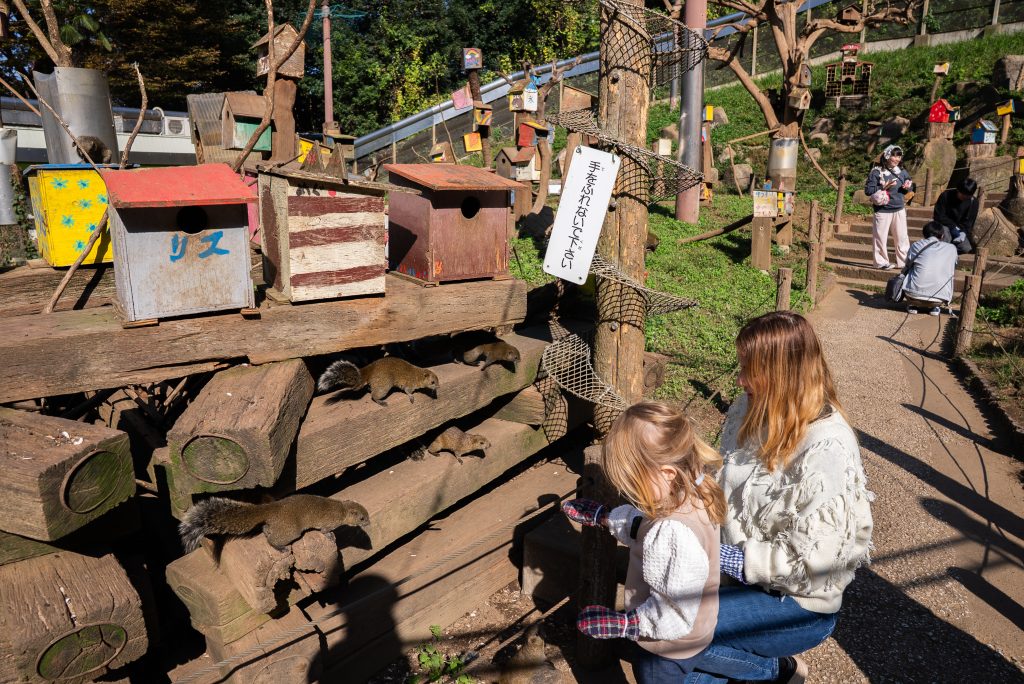
This long-standing park opened in 1988 as a place where people with disabilities could work and actively contribute to their community. The park provides them—currently around 20 staff members—with various opportunities to manage the facility, from interacting with customers and packing food for the squirrels to making original souvenirs and pop-up displays, and even filming and editing the park’s promotional videos and materials. Some of the staff have been with the park since its opening 35 years ago.
Being at Machida Squirrel Garden feels like stepping into a small, close-knit community—from the handmade squirrel houses and handwritten instructions throughout the park to the friendly interactions among staff, visitors, and the adorable park residents. Some of the staff may even remind you of friendly squirrels themselves—look around for the squirrel ornaments and tails. The kids will have a chuckle about it, and you’ll love every encounter, too!

2. Benesse Star Dome: Learn About the Universe from Tokyo
Just a short walk from Tama Center Station on the Keio and Odakyu lines, Benesse Star Dome is a modern indoor planetarium, located inside the Tokyo headquarters of the educational and publishing giant, Benesse Corporation. Serving as an educational tour spot for larger groups on weekdays and open to the general public on weekends and public and special holidays, this is Tokyo’s closest place to space. Equipped with comfortable reclining seats and spaces to lie down and watch the stars, it’s a popular venue for families with kids who want to feel the infinite power of the universe without sacrificing comfort or breaking the bank.
On public days, the planetarium offers several shows tailored to different age groups. Toddlers will love the animated programs featuring popular characters, while high school students and older folks will appreciate the more in-depth documentaries that tackle complex topics like how the universe was born and what small part we humans play in it. Due to limited seating and to avoid overcrowding, numbered tickets are available every morning from 9:50 onward, so it’s best to arrive around that time. Once you get a ticket, you can use it for any show scheduled that day.
A special perk for those who manage to secure a ticket for the planetarium is the waiting area on the 21st floor of the facility—an observatory that offers views of the wide Tama area and beyond. For parents with babies and travelers with disabilities, the planetarium also has a nursing room and an accessible restroom.
3. Trains, Playgrounds, and Endless Adventure at Tama-Doubutsukoen Station
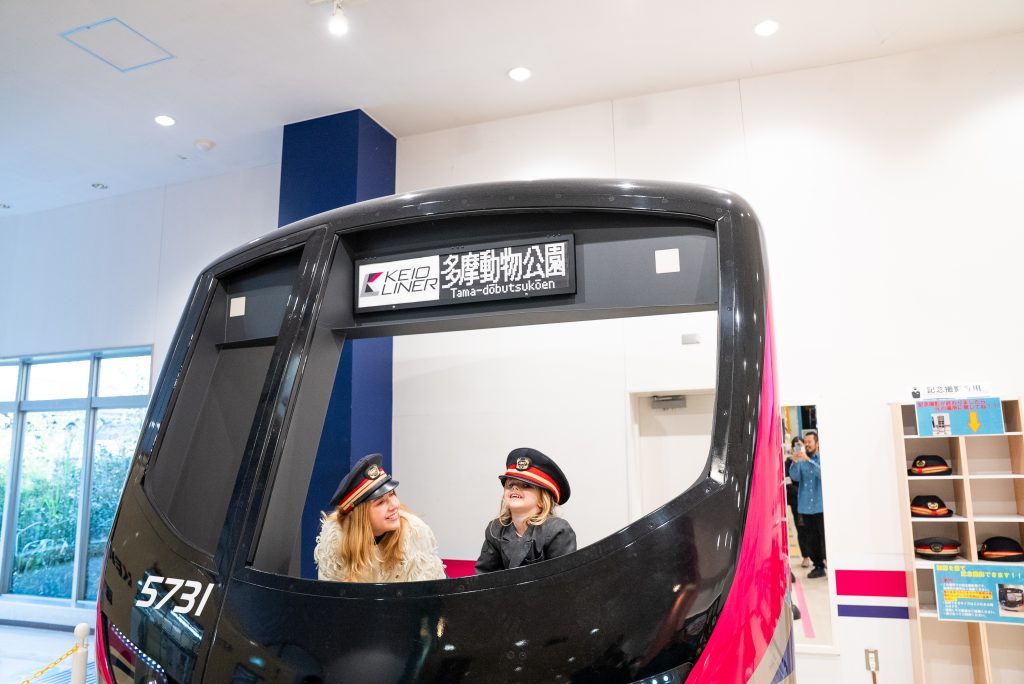
If you have a child who loves trains, athletic adventures, and playparks, head to Keio-Doubutsukoen Station on the Keio Line or the Tama Monorail. Surrounding this station are multiple family-friendly facilities, collectively known in Japanese as “Kids Park Tamado.” This vast adventure area consists of Keio Rail-Land, Keio Asobi no Mori HUGHUG playpark and HUGHUG Café, the thrill-filled athletic ground HUGTRATOPS, and Tama Zoo, all located just a stone’s throw from the station. You can easily spend the whole day there, and the children will still not have enough!
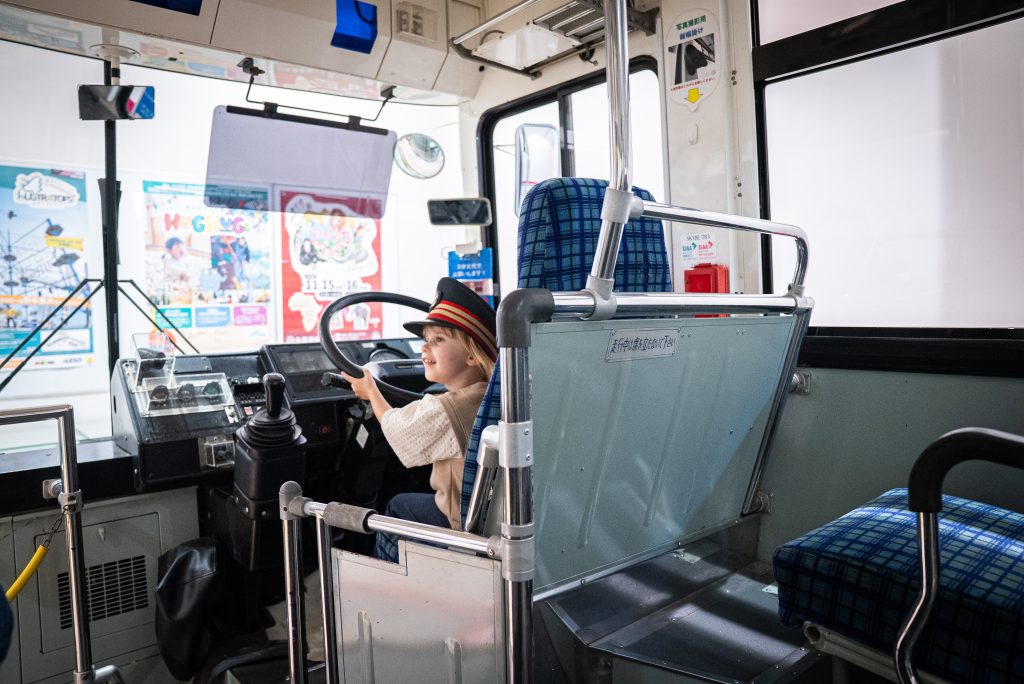
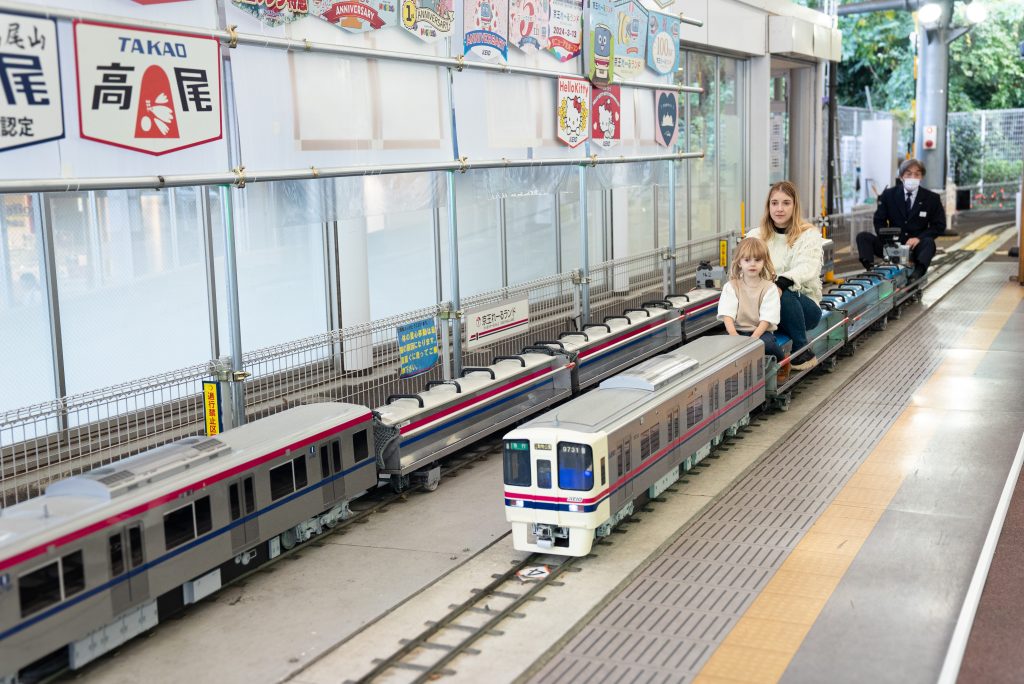
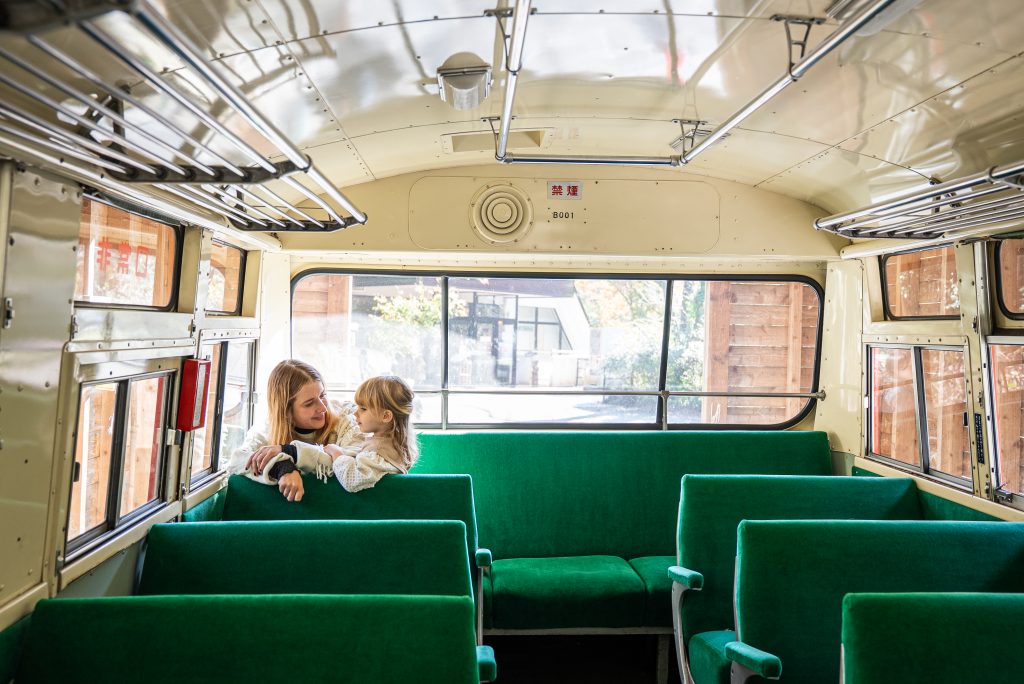
Keio Rail-Land is a train-themed park operated by the Keio Corporation. Inside, you’ll find real-train simulators where children can test their driving skills, photo spaces to pose as train drivers, ride a miniature train in circles, and enjoy hopping on and off real-life-sized Keio trains and buses that once ran through Tokyo. This is especially fun for small children—they may ask you to get on and off the bus, purchase an invisible ticket, and enjoy being the boss of the day.
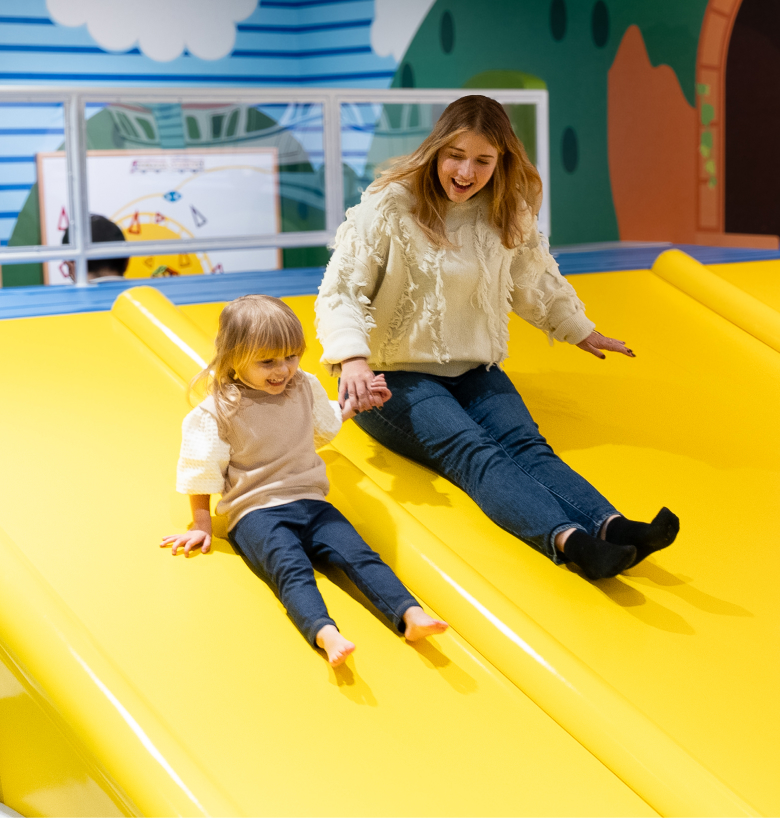
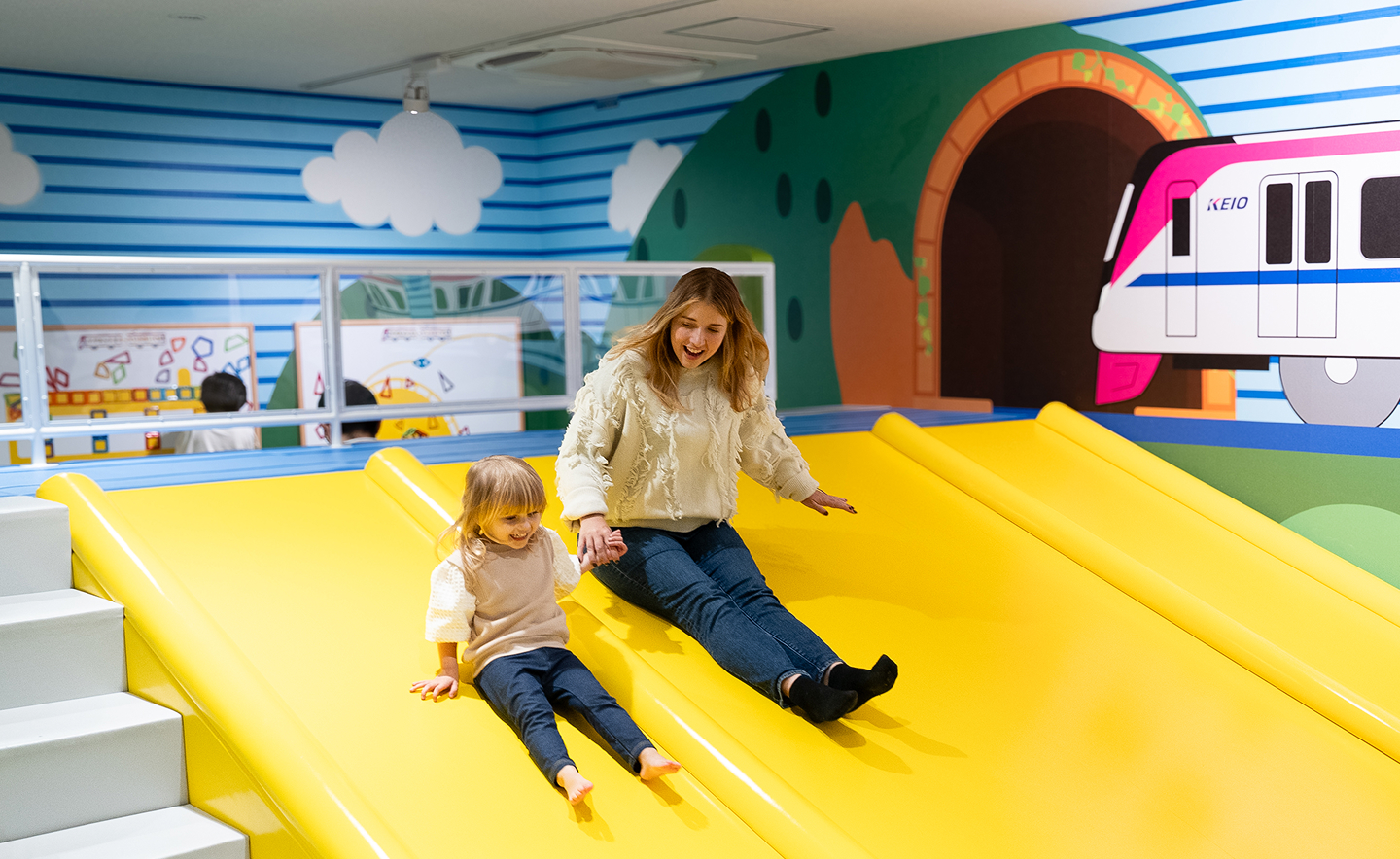
On the second floor of the facility, children will have a blast building train lines, jumping in ball pits, and going down slides again and again.
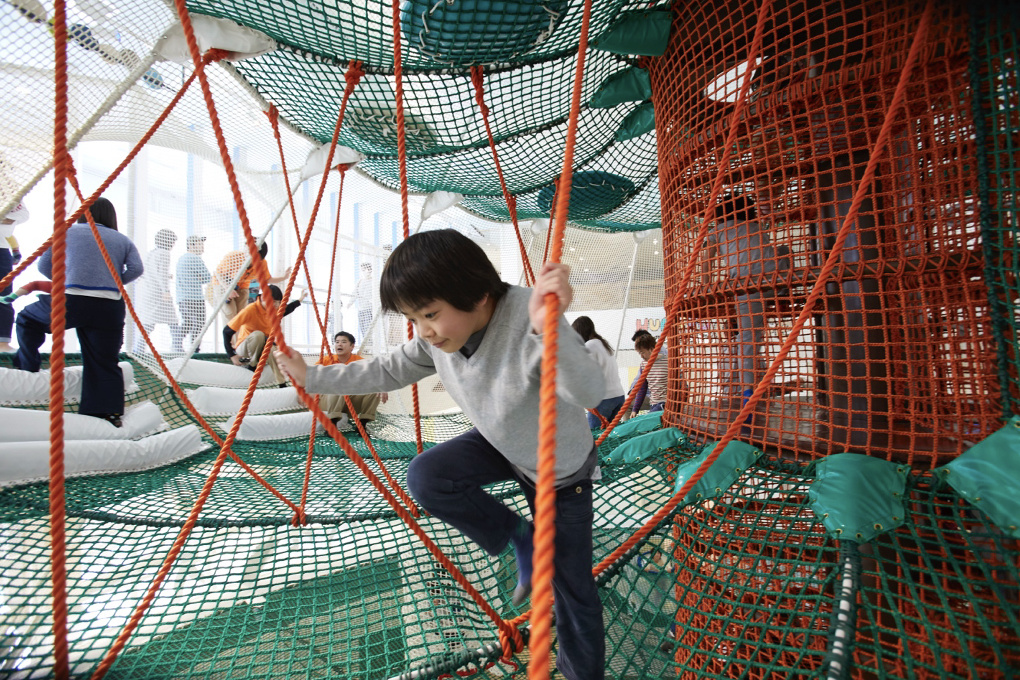
A short walk from Keio Rail-Land is another amusement facility called HUGHUG. This indoor play area is packed with playgrounds and fun experiences, including a 12-meter-high tree-lookalike climbing net, one of the largest in Japan.
The adjacent HUGHUG Café offers delicious kid menus and low seating space perfect for families with babies and toddlers. From the cafe, children can watch the HUGHUG train pass by—if you hear sudden cheers and excitement, it’s probably because of it.

The latest addition to the park is HUGTRATOPS, a massive adrenaline-fueled athletic playground. More fitting to older children (you need to be at least 1.25m tall to be admitted), this facility includes Tokyo’s first outdoor athletic tower—a giant 16-meter sculpture that isn’t for the faint of heart. Here, you can enjoy 37 different activities, divided into three levels of difficulty: you can climb up, walk along thin ropes and steps, cycle a bike or ride a boat up in the air, and so much more.
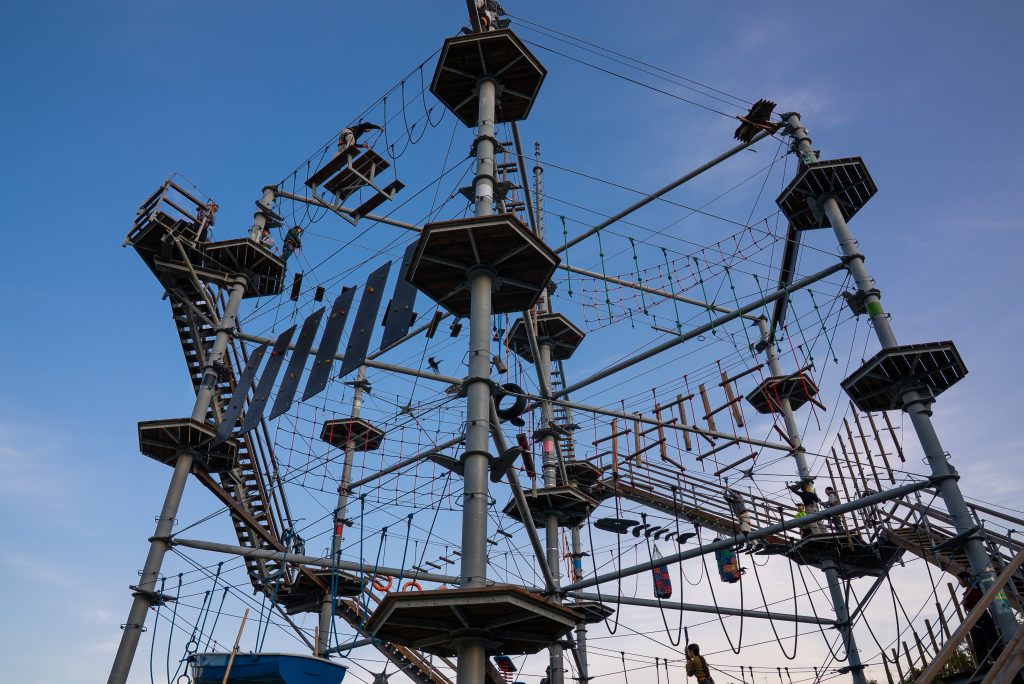
The highest level rises nearly as high as the Tama Monorail, offering truly rewarding views—though only recommended for those who aren’t scared of heights or the thrill (which is fully guaranteed). The children’s course—also one of the largest in Japan—is better suited to younger visitors (over 100 cm tall) and features three distinct courses with 32 attractions, including zip lines and 1-meter-high athletic courses.
At the end of the day, both children and parents will enjoy taking the train from Tama-Dobutsukoen Station, which is quite literally in the center of the park—it almost feels like boarding the train is the final attraction of the day.
4. Yuyake Koyake Fureai no Sato: Beautiful Outdoors and Friendly Animals
If you’ve been in Tokyo for a while, you have surely noticed that a chime fills the air in the city exactly at 5pm. Used as a signal to lead children back home and as a daily check on the sirens’ equipment, these chimes are a staple of the Japanese experience—tunes that gently ensure normalcy in daily life. For many Tokyoites, one of those chimes is “Yuyake Koyake,” a children’s song that beautifully describes the arrival of the evening and urges children to head home. This song was inspired by Kamiongatamachi in Hachioji, the hometown of Yuyake Koyake Fureai no Sato, a vast park with multiple facilities for learning and enjoying the blessings of nature.
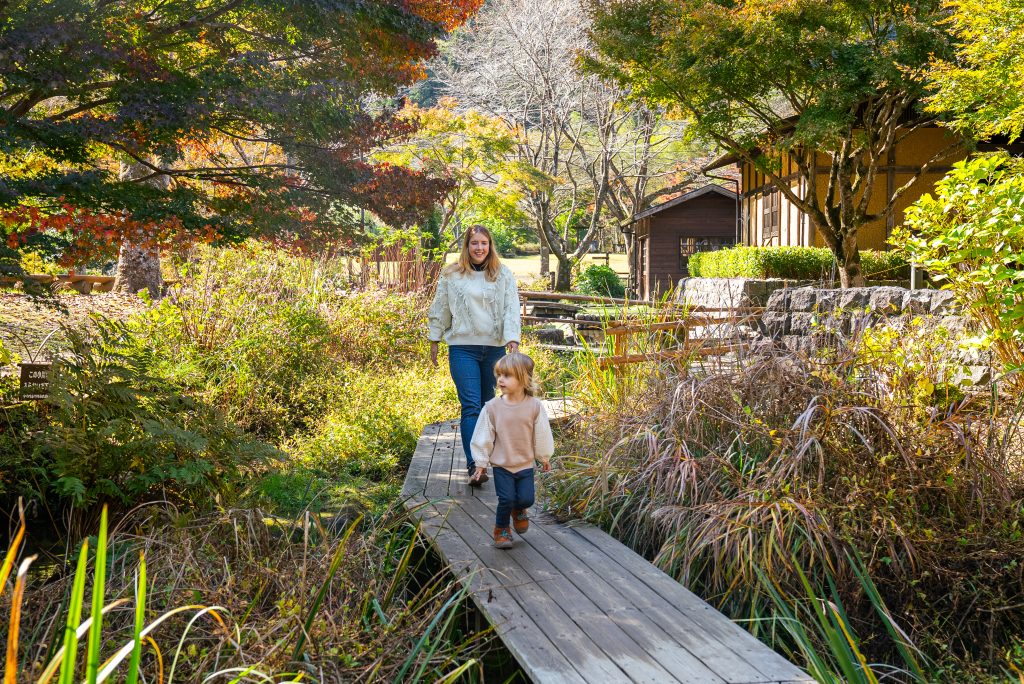
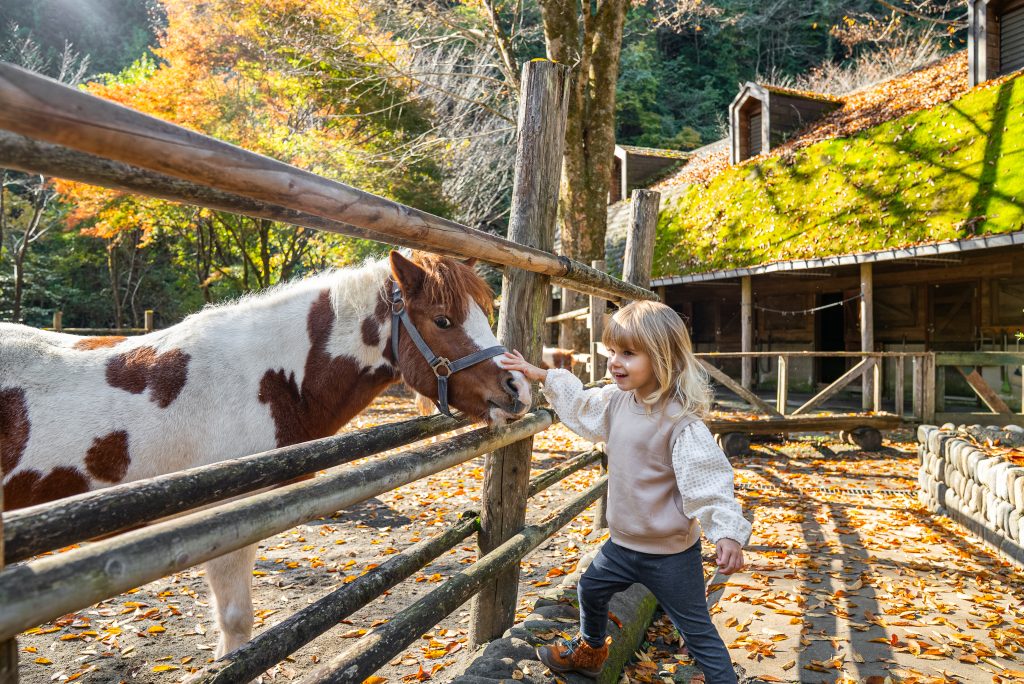
Part park, part campsite, part flower garden, Yuyake Koyake Fureai no Sato is a lovely place for a family walk any time of year. If you visit in spring, you’ll enjoy dozens of blooming flowers. Come autumn, you’ll be drawn by the stunning red foliage shades. In early summer, you can dip in the endless greenery of the park and marvel at its fireflies at the annual firefly festival. The facility also features a small farm, where children can pet animals, ride ponies, and help feed the animals. There is also a barbecue facility, a camping site, a public bath, a restaurant, and a lodging facility. Children will also enjoy the large bus replica and the vast play area.
Yuyake Koyake Fureai no Sato is a lovely spot, hidden away from the city crowds, that makes it easy to see what inspired the lyrics of the Yuyake Koyake song: beautiful sunsets, mountain temple bells ringing in the distance, a moon shining brightly, and birds, alone to dream as the stars fill the sky. Like the song, Yuyake Koyake Fureai no Sato is a place that reminds us of a time before screens demanded our attention—when nature encouraged conversation and brought out our best selves.
5. Yomiuriland: Over 60 Years of Thrills and Fun
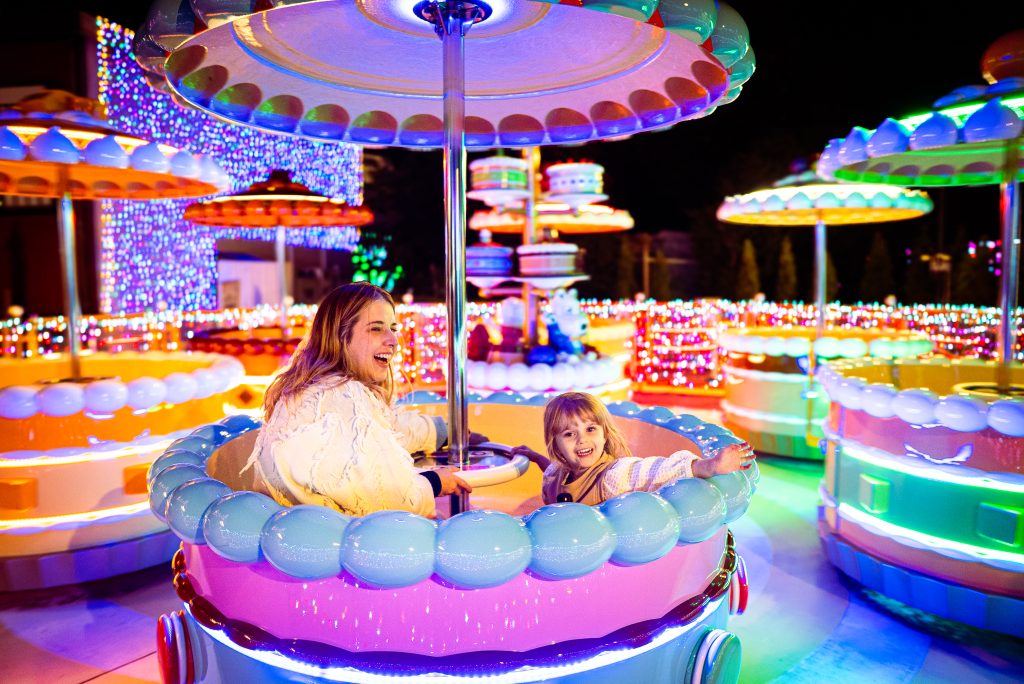
Bringing joy and thrill to many Tokyoites since 1964, Yomiuriland is one of the oldest amusement parks in the capital. Featuring over 40 rides, from easy rides for younger visitors to max thrill-inducing rides, Yomiuriland is a vast playground filled with fun of all kinds. Yet despite its long history, Yomiuriland is less crowded than most major amusement parks.
The park offers excitement year-round. In spring, cherry blossoms fill the area, and Bandit—the park’s iconic roller coaster—races straight through the blooming trees at 110 kilometers per hour. The views are spectacular, if you’re not too spooked to look around. In summer, the park draws crowds for its multiple pools and waterslides. Come winter, and you can easily get lost in the beauty of the annual Jewellumination winter wonderland—thousands of lights covering the entire area in one of the most dazzling illuminated displays in Tokyo.
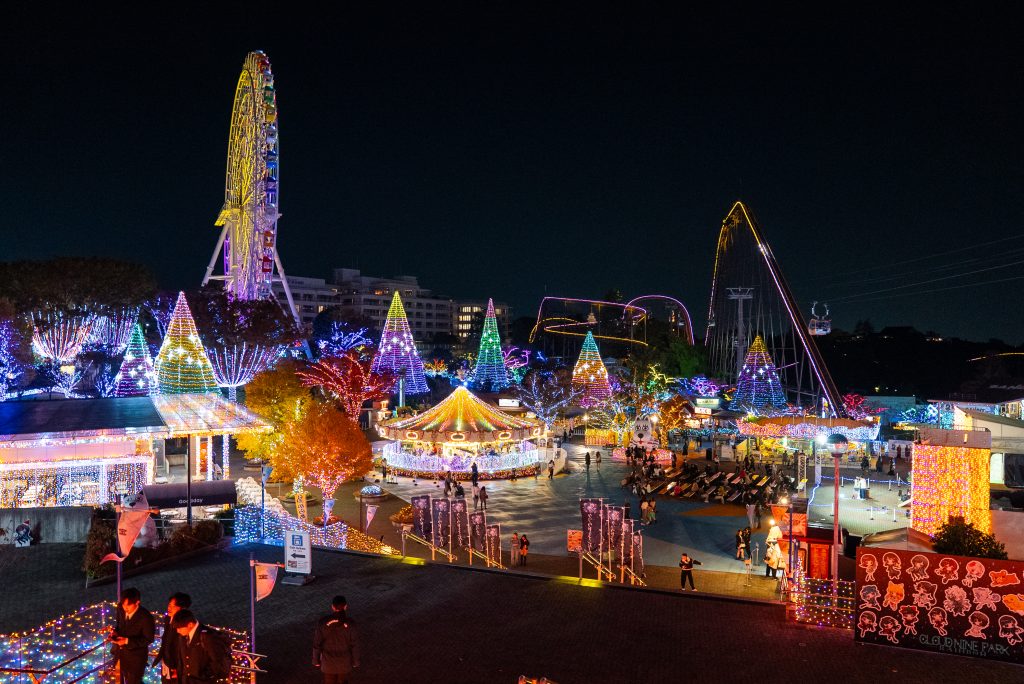
In 2026, Yomiuriland is expected to draw even more visitors with the opening of the PokéPark KANTO, the first permanent outdoor Pokémon attraction. Stretching over 26,000 square meters in a corner of Yomiuriland, the park opened in early February 2026—yet another reason to pin this spot on your travel map.
Plan Your Visit: Access & Tips for Minami Tama
Getting Around
The Minami-Tama area’s five cities of Hachioji, Machida, Hino, Tama, and Inagi can all be accessed via a short ride from central Tokyo on the Chuo, Keio, Odakyu, and other local lines. All these areas are also easily accessible by car, and parking is plentiful throughout the area. Many roads here are more spacious than in central Tokyo, too. Apps such as Parkopedia, SmooPA, NaviPark, or P.P.Park! are helpful for finding parking.
Food & Facilities
All cities in Minami-Tama are residential, which means that you’ll find plenty of options for dining wherever you go. The areas around Hachioji and Machida stations, in particular, are home to many shopping malls and restaurants.
When to Visit
The region is ideal to visit at any time of year, but the spring cherry blossoms and autumnal foliage in places such as Yuyake Koyake Fureai no Sato and Yomiuriland are particularly spectacular.
Accommodations
The Tama area may be close to central Tokyo, but with so much to see and do there, it’s worth staying overnight and exploring further. For recommended places to stay, see here.
Explore further
For further information and the latest updates on all featured locations, see their respective websites here:
GET TO KNOW Minami-Tama