
6 Things to Do in West Tokyo: A Day Trip to Fussa, Mizuho, and Hamura
What if one of Tokyo’s most surprising neighborhoods wasn’t neon-lit or futuristic, but quietly nostalgic?
On the western edge of the capital, the neighboring cities of Fussa, Mizuho, and Hamura rarely appear in standard Tokyo guidebooks. Yet a day trip here reveals a side of the city you won’t find elsewhere—this area is home to Tokyo’s largest fully fledged American neighborhood, seamlessly layered into local daily life. Rather than headline attractions, the appeal of these towns lies in their textures: nature, spirituality, and everyday routines woven together at an unhurried, lived-in pace. Linger a little longer and wander beyond the main road, and the American influence gradually fades, giving way to a more intimate Japan—quiet residential lanes, neighborhood shrines, small parks, nostalgic shops, and long-loved eateries that locals still frequent.
Smaller and slower than central Tokyo’s headline destinations, Fussa, Mizuho, and Hamura offer a glimpse of a city shaped by memory, community, and history—a past that still quietly informs life in the capital today. Here are seven ways to experience it.
1. Explore Tokyo’s American Town: Fussa Base Side Street
Welcome to Tokyo’s own little pocket of America: Fussa Base Side Street. As you approach the main strip, the change is immediate. Quiet residential roads give way to bursts of color, English signage, and storefronts that feel unmistakably out of place—in the best possible way.
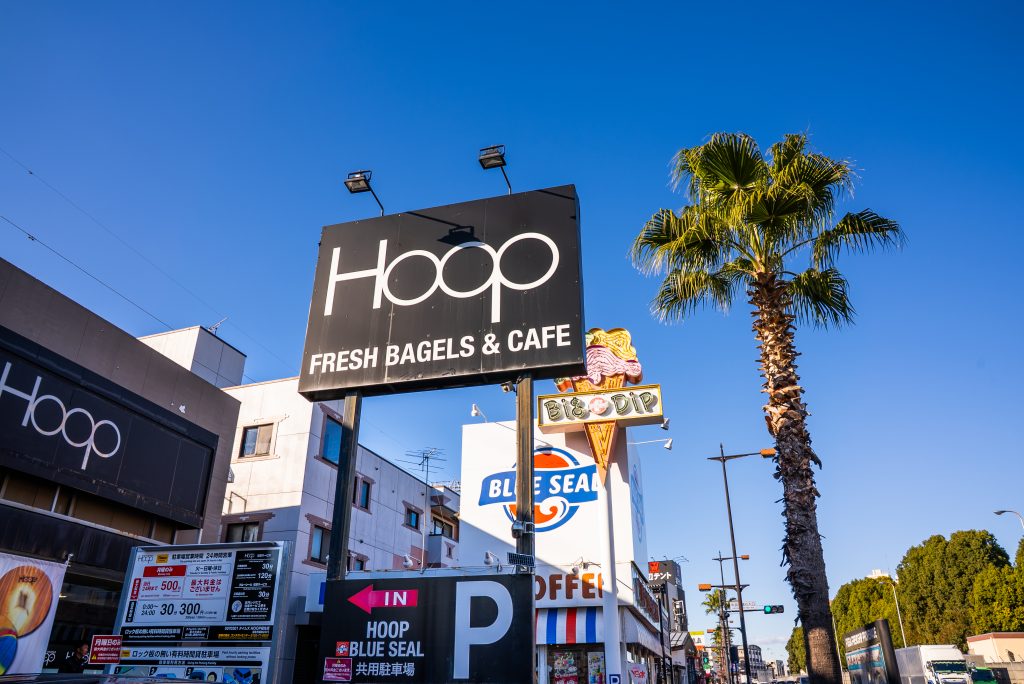
Running alongside the perimeter of U.S. Yokota Air Base, the street has been shaped by the presence of American forces stationed here since the end of World War II. Over decades, that influence has spilled beyond the base gates and into everyday life, creating a streetscape where pastel diners, neon signs, and thrift shops packed with Americana sit comfortably within suburban West Tokyo.
Food lies at the heart of Fussa Base Side Street’s appeal. Longstanding burger and bagel joints share space with small-batch bakeries serving New York–style sweets alongside Japanese twists—think melon soda crowned with whipped cream and a bright red cherry. It’s a place where nostalgia, comfort food, and local adaptation come together, and where wandering in hungry is half the fun.

Among the standout food spots on Fussa Base Side Street is The MINT MOTEL, a beloved local hangout known for its playful menu and mint-green retro aesthetic. The restaurant captures what makes the area’s food culture distinctive: classic American diner comfort interpreted with Japanese attention to balance, presentation, and ingredient quality. Alongside milkshakes and waffle sandwiches topped with red, white, and blue sprinkles, you’ll also find seasonal specials and craft drinks. The easy mix of locals and base visitors gives the place a neighborhood-hub feel rather than just a themed restaurant.
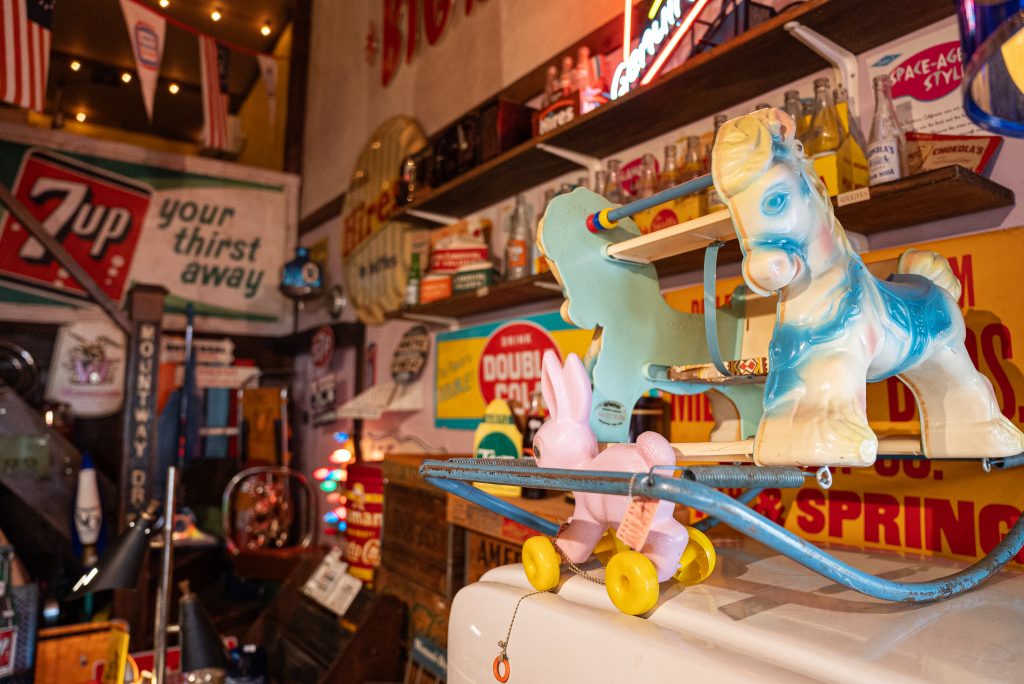
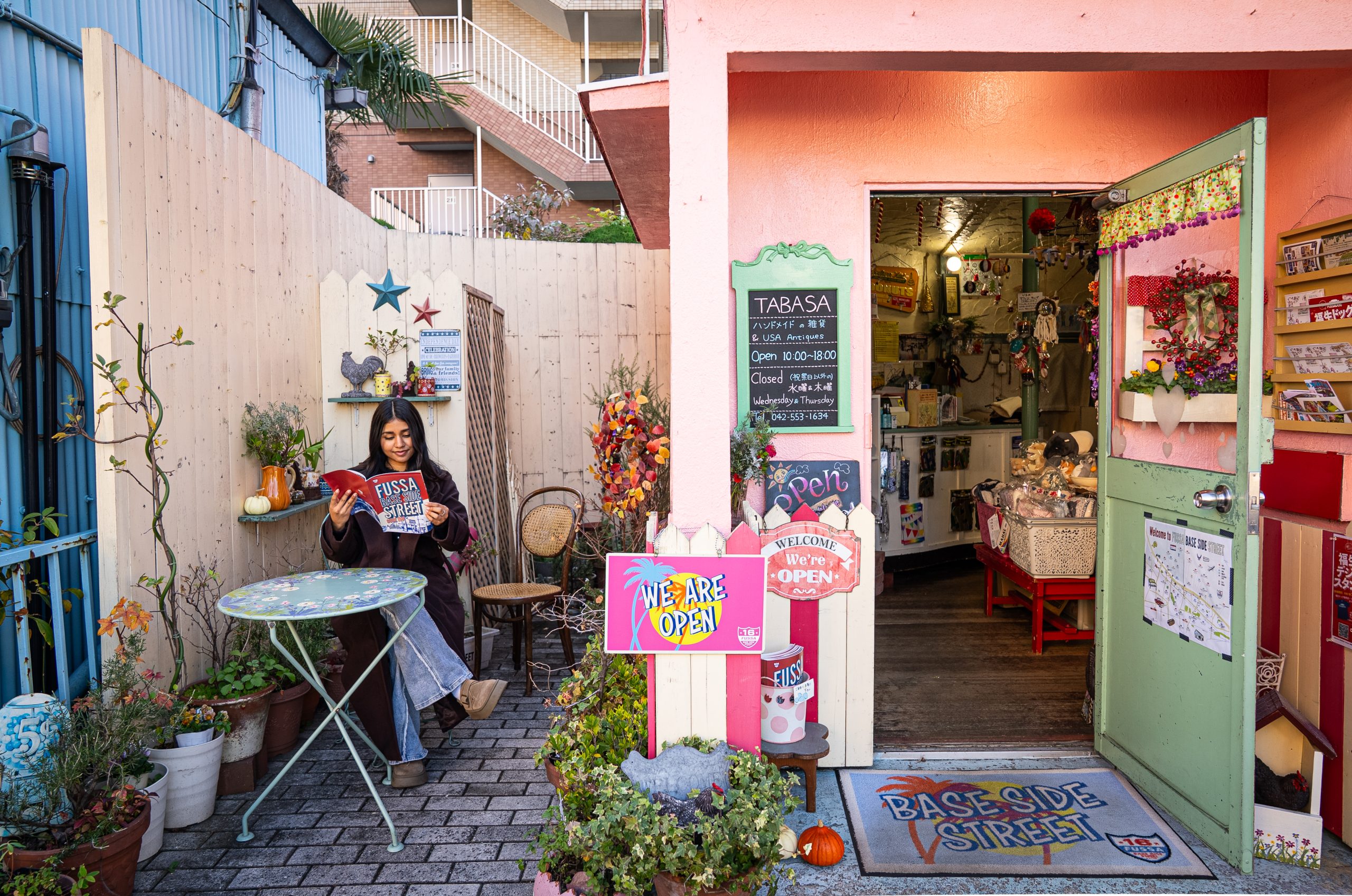
Thrift shopping is another major draw on Fussa Base Side Street, home to around 30 thrift stores selling everything from American vintage signboards and antique dining sets to cutlery and clothing you’re unlikely to find elsewhere in Tokyo. A good place to start is BIG MAMA, one of the street’s most iconic shops, conveniently located next door to The MINT MOTEL. Packed floor to ceiling with old-world home goods, retro appliances, and curios signage, it’s the kind of place where you can easily lose track of time while browsing. Farther along the street, Narnia and TABASA are also worth a stop, each adding its own flavor to the area’s eclectic secondhand scene.
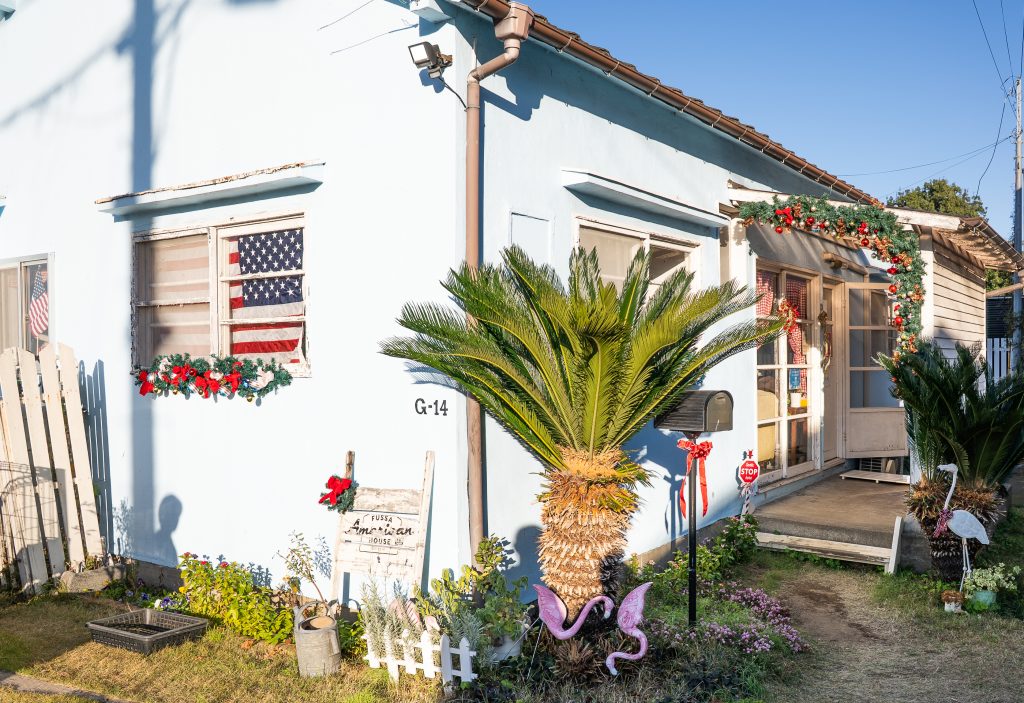
A short walk from Fussa Base Side Street, another trace of the past hides in plain sight. Fussa American House is a living relic of postwar Tokyo, tucked just behind the main stretch of antique stores and eateries. Built in 1958 as a residence for U.S. military personnel, the house has since been carefully restored and repurposed as a free community museum and cultural space. Inside, the single-story home is furnished with period pieces, memorabilia, and exhibition panels that illuminate both everyday life in the house and the broader history of Fussa in the mid-20th century. Stepping into Fussa American House—and then back onto Fussa Base Side Street—feels like slipping into a preserved moment in time, where the charm of mid-century American culture and its lasting influence on Japan still quietly linger.
2. Enjoy Stillness at Fussa’s Kumagawa Shrine
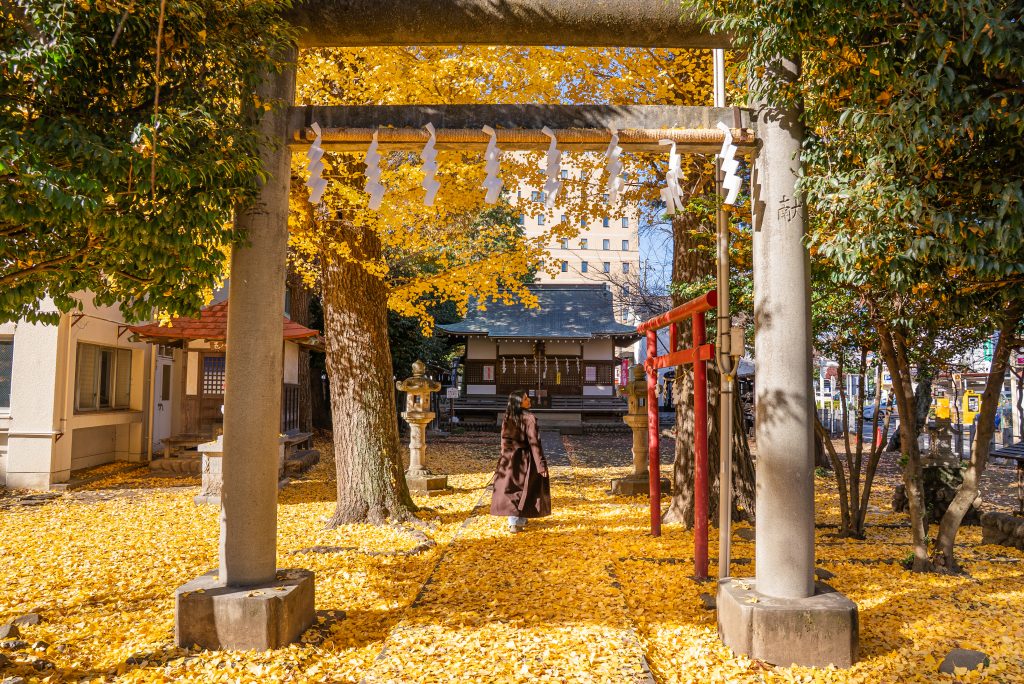
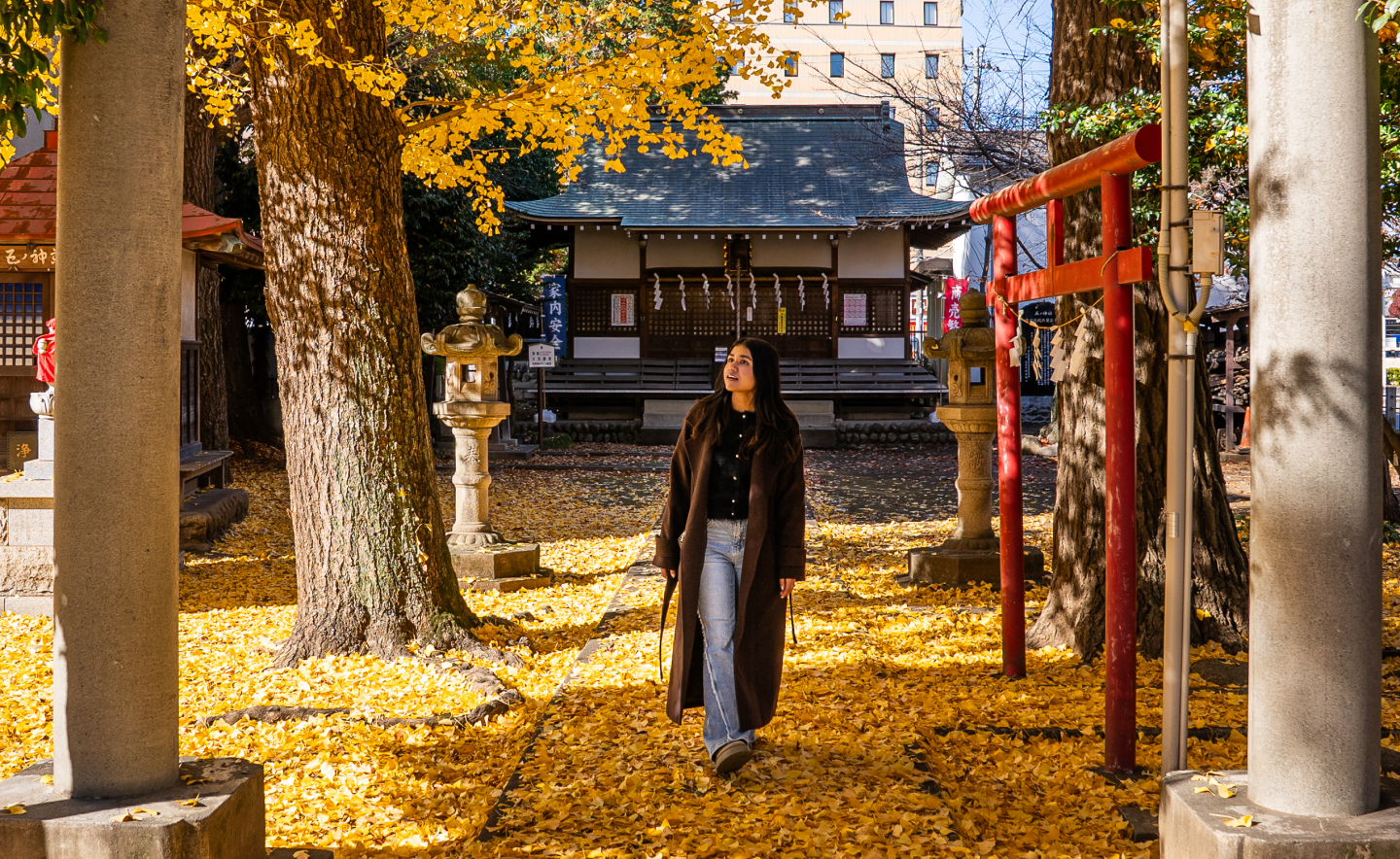
Kumagawa Shrine is a quiet sanctuary tucked into a residential pocket of Fussa, just a short drive from Fussa Base Side Street. Step through its towering torii gate and the atmosphere noticeably shifts—the noise softens, movements slow, and a sense of calm settles in. The only sounds here are the rustle of leaves overhead and the occasional footstep along the gravel path, with dappled sunlight filtering gently through the trees.
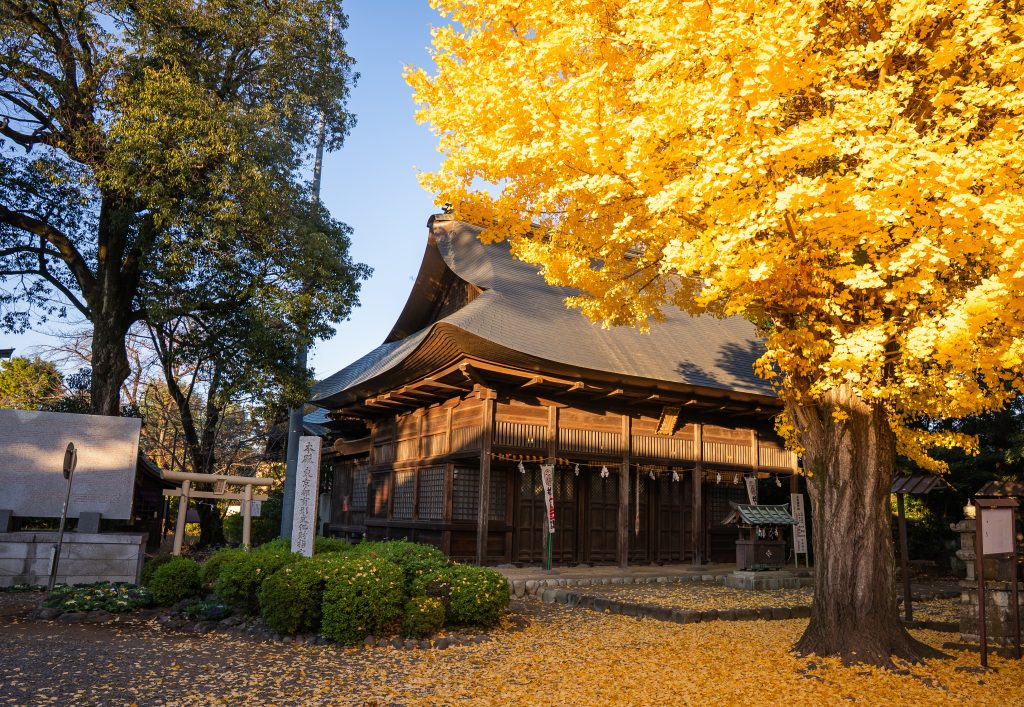
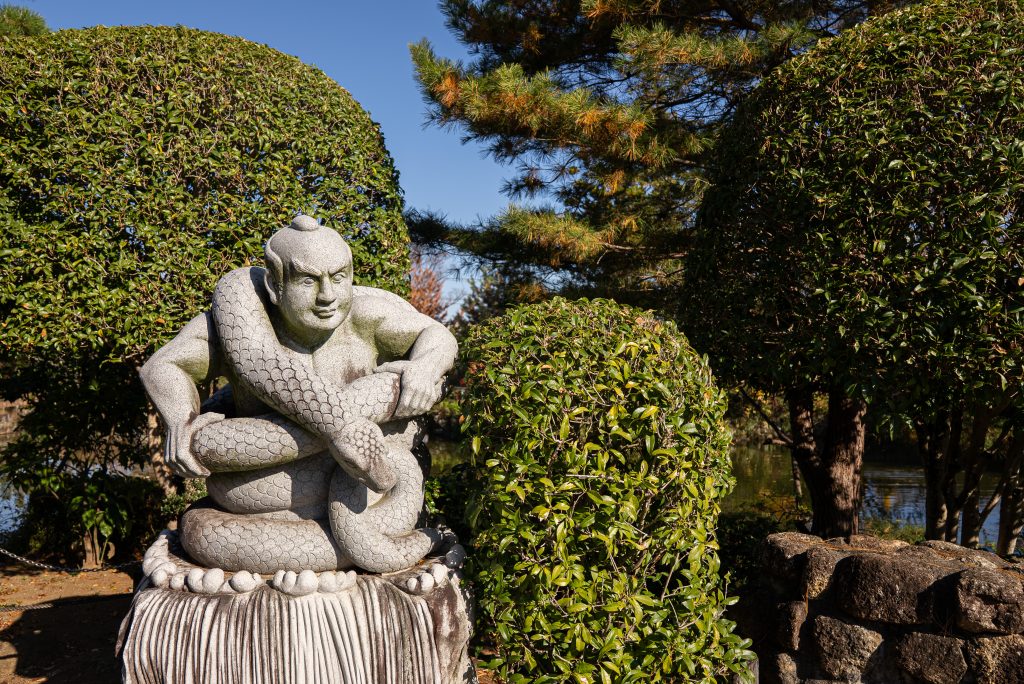
According to local records, Kumagawa Shrine’s history stretches back to the early Heian period (794–1185), when it was associated with the worship of Ugajin, a snake deity linked to fertility and prosperity. The approach to the shrine is lined with stone statues of the Shichifukujin, Fussa’s Seven Deities of Fortune, quietly guiding visitors toward the main hall.
Set well away from Tokyo’s main sightseeing routes, Kumagawa Shrine remains deeply woven into everyday local life. Residents stop by for short walks, morning prayers, or moments of reflection, offering visitors a rare glimpse into the community’s living, unpolished spiritual rhythms.
3. Witness the Changing Seasons at Mizuho’s Sayamaike Park
Located in Mizuho Town and just a 15-minute walk from Hakonegasaki Station, Sayamaike Park unfolds as a calm expanse of water and woodland. Despite its suburban setting, the park feels surprisingly expansive, offering a quiet retreat shaped by ponds, trees, and gently curving walking paths.
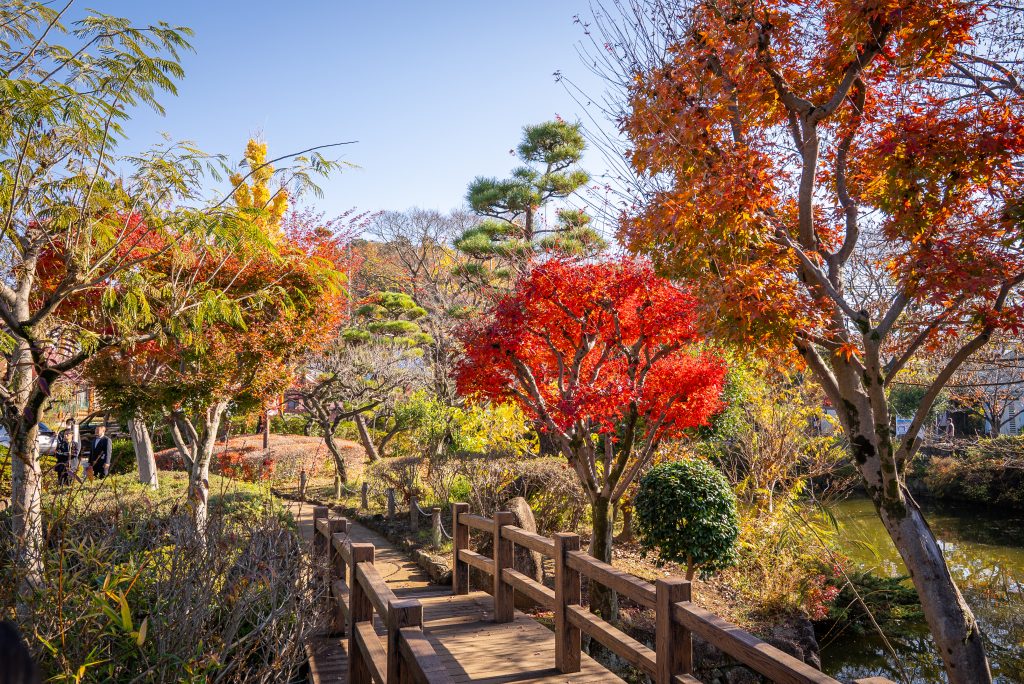
The park centers around three interconnected ponds, each with its own character—a fishing pond, a natural observation pond, and the garden-style Hako-no-ike. Together, they form a compact landscape of reed-lined edges, small islands, and shaded trails that support a rich range of plant and bird life—an unexpected pocket of biodiversity tucked into everyday residential surroundings.
The park’s walking loop is short and easy to navigate, making it popular with families, dog walkers, and anyone seeking a quiet moment in nature without leaving the city. Sayamaike Park is also known locally as a kingfisher hotspot—keep an eye out for flashes of blue and orange as the birds dive for fish along the water’s edge. Across the seasons, the landscape shifts dramatically, with cherry blossoms and fresh greenery in spring giving way to rich reds and golds in autumn, making the park a rewarding visit at any time of year.
4. See Most of Tokyo and Beyond from Mizuho’s Rokudoyama Park
Spanning more than 1.3 million square meters when combined with its surrounding natural areas, the Rokudoyama area ranks among Tokyo’s largest urban-metropolitan parks. It stretches along the western edge of the Sayama Hills into the quiet town of Mizuho, where dense woodland creates a sense of distance from the Tokyo most visitors recognize.
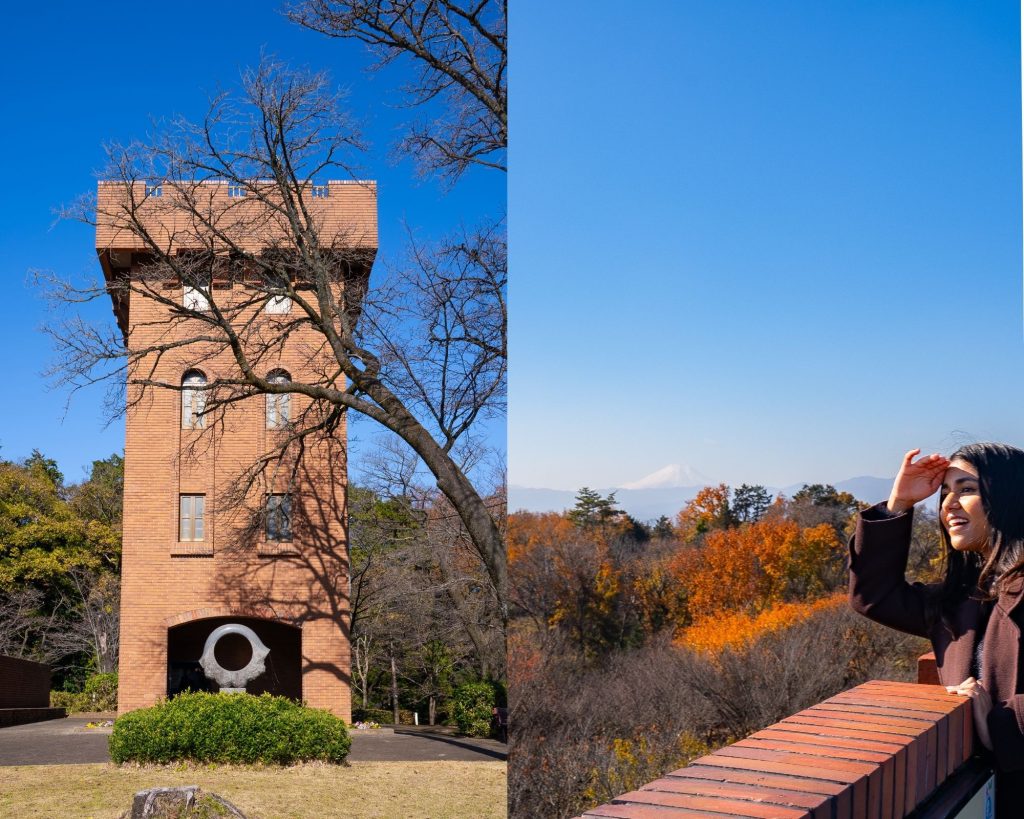
The park’s defining landmark is its red-brick observation tower, which rises 13 meters above the forest floor and offers a full 360-degree panorama—taking in distant Mt. Fuji, the ridges of the Chichibu Mountains, and, closer in, Shinjuku’s skyline and the surrounding suburbs.

Walking Rokudoyama’s gentle trails feels like stepping into a satoyama postcard. Tree-lined paths wind through the forest as birds flit overhead, and sunlight filters softly through the canopy. In former valley zones, park caretakers have restored traditional rural features, including recreated paddies, narrow water channels, and a reconstructed satoyama folk house. The result is a place that functions equally as a green escape and an open-air museum of Tokyo’s rural heritage. Thanks to the park’s sheer scale, it’s not uncommon to find yourself alone on the trails or atop the observation deck, accompanied only by birdsong and passing breezes.
5. Go Back in Time at Hamura’s Gonokami Shrine and Maimaizu Well
Just a two-minute walk from Hamura Station, Gonokami Shrine sits quietly within a residential neighborhood, its modest appearance belying a long history. For centuries, the grounds have anchored local spiritual life, yet the site’s most distinctive feature is not its hall or gate, but the neighboring Maimaizu Well—an archaeological curiosity and local icon with a history spanning more than 900 years.
The well’s name, maimai—meaning “snail”—refers to the spiral-shaped steps that descend into the earth. Before vertical digging techniques became widespread, well-makers widened the pit and carved a sloping spiral ramp along its walls, allowing residents to walk directly down to the water source while passing through distinct layers of soil. The result is a structure that feels part-engineered, part-sculpted—a rare example of ancient ingenuity preserved in the middle of suburban West Tokyo.
Until the mid-20th century, before modern municipal utilities replaced communal wells, Maimaizu Well served not only as a vital water source but also as a natural gathering place for the community. Residents recall coming here daily to draw water for drinking and household use, chatting as they waited their turn. Today, the well is sealed and carefully preserved as a historic site—a quiet reminder of how closely daily life, shared resources, and spiritual spaces were once intertwined in Hamura.

Standing at the edge of the well, your gaze moving from its spiral stonework to the shrine’s weathered timber, it’s easy to imagine the centuries when spiritual practice and daily survival unfolded side by side in this place.
For travelers drawn to quieter, more intimate stories from Tokyo’s outer reaches, the pairing of Gonokami Shrine and Maimaizu Well makes for an unexpectedly moving stop. Though the well no longer supplies water to the community, it continues to nourish something else—an appreciation for how ordinary life and local devotion once intertwined, long before Hamura became part of the Tokyo we know today.
6. Eat Local, Think Global at Hamura’s ZONAVOCE
ZONAVOCE is an intimate, wood-fired pizzeria in Hamura, just a pleasant 10-minute walk from Hamura Station. Quietly beloved by locals, it brings together Italian comfort food and Japanese sensibility in a way that feels both thoughtful and inviting.

The restaurant’s name—a playful Italian–Portuguese hybrid hinting at zone and voice—reflects the owners’ philosophy: simple, rustic cooking that communicates warmth and care. An open-front dining space frames a large wood-fired oven and open kitchen, where handmade pizzas, seasonal pastas, and a small selection of globally inspired desserts take center stage. ZONAVOCE is frequently praised for its crisp, flavorful pizza crusts, welcoming service, and relaxed atmosphere—qualities that naturally draw locals and visitors to the same table.
Whether you stop by for a leisurely lunch set or settle in for a cozy evening meal, ZONAVOCE offers an experience that feels unhurried and personal. Watching your pizza come together in the open kitchen becomes part of the pleasure, making the first bite feel less like an arrival and more like a shared moment.
Plan Your Visit: Access and Tips for Enjoying Mizuho, Fussa, and Hamura
The neighboring areas of Mizuho, Fussa, and Hamura each offer their own blend of natural scenery, history, and local character, making them a rewarding destination in Tokyo’s outer western suburbs. While close to one another, the spots featured in this article are spread across several neighborhoods, so a bit of advance planning will help you make the most of your visit.
Access & Transportation
Traveling by car is the most convenient way to move between Mizuho, Fussa, and Hamura. That said, the area is also accessible by train, with different stops serving different locations—including Fussa Station, Hakonegasaki Station, Haijima Station, and Hamura Station. If you plan to use public transportation, be sure to check local train routes, schedules, and transfer options in advance using official websites or transit apps.
When to Visit
Mizuho, Fussa, and Hamura can be enjoyed year-round, with each season offering its own highlights. Keep in mind that operating hours for attractions, shops, and restaurants may change during peak travel periods and public holidays. Before heading out, it’s recommended to confirm opening hours, check the weather, and allow extra travel time between stops to ensure a smooth, relaxed day trip.
Many establishments along Fussa Base Side Street also accept U.S. dollars, reflecting the area’s long-standing ties to the nearby air base.
Fussa American House is open to visitors most Fridays, Saturdays, Sundays, and public holidays from 11:00 am to 5:00 pm. Please confirm opening hours online before visiting.
Where to Stay
A variety of accommodations are available across Mizuho, Fussa, and Hamura. During peak travel periods—such as the spring cherry blossom season and autumn foliage season—it’s best to check access details carefully and book ahead. For recommended places to stay, see here.
GET TO KNOW Mizuho / Fussa / Hamura